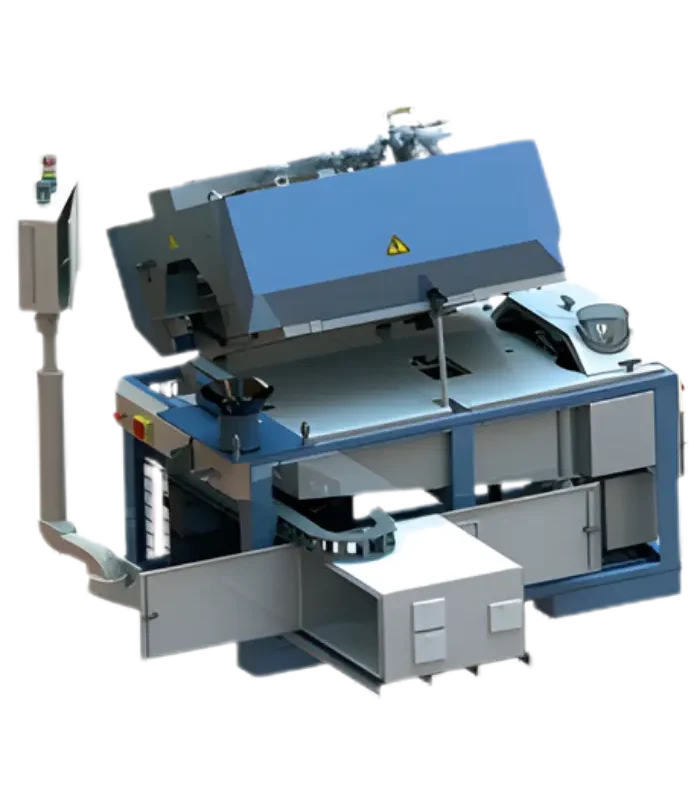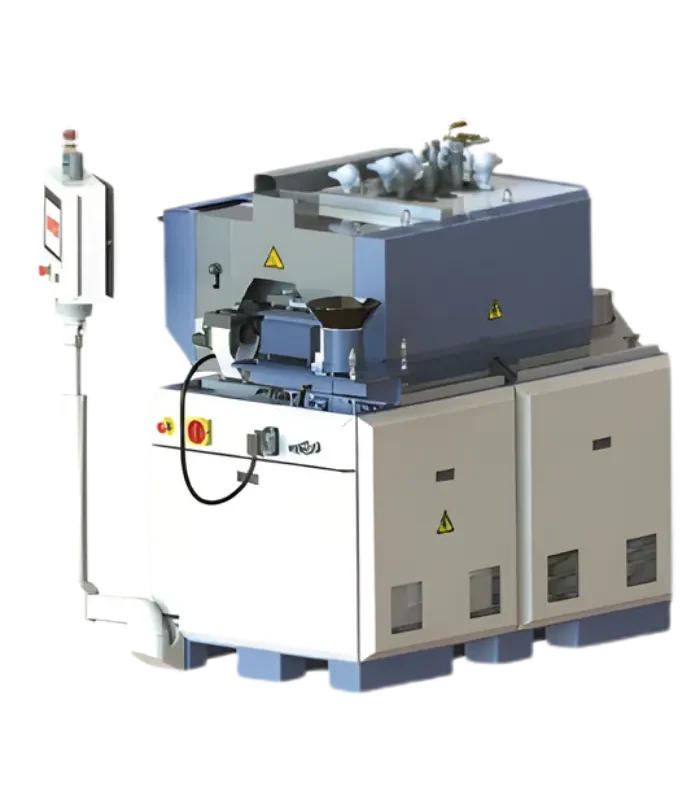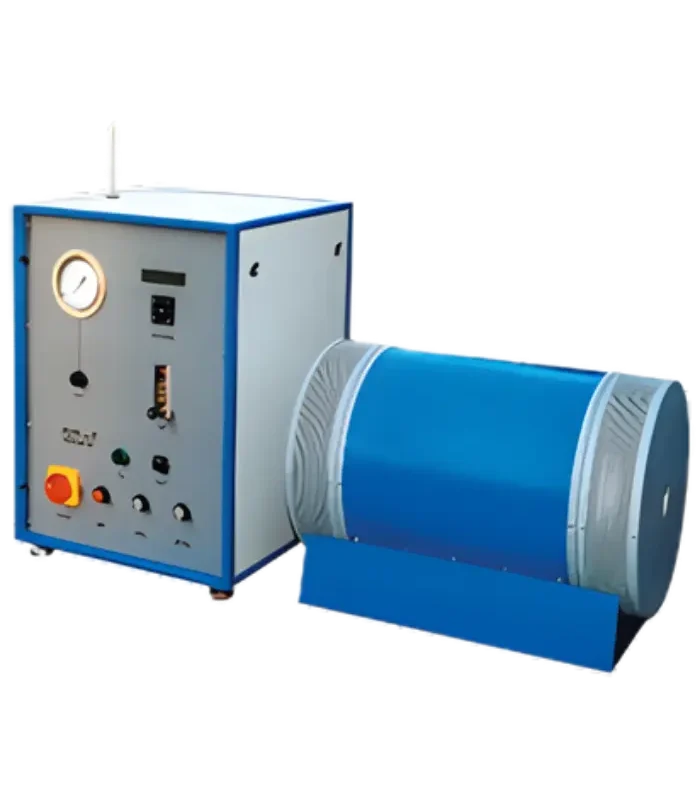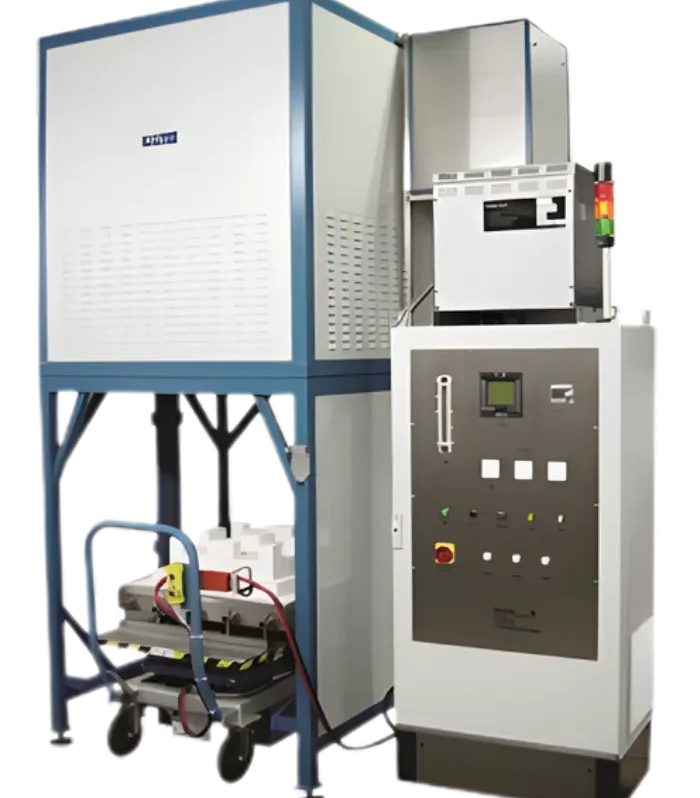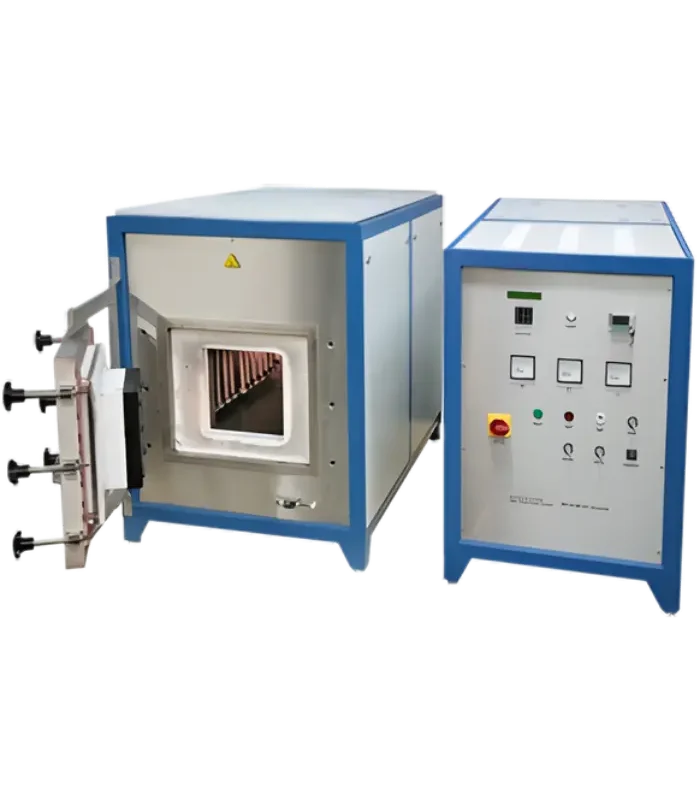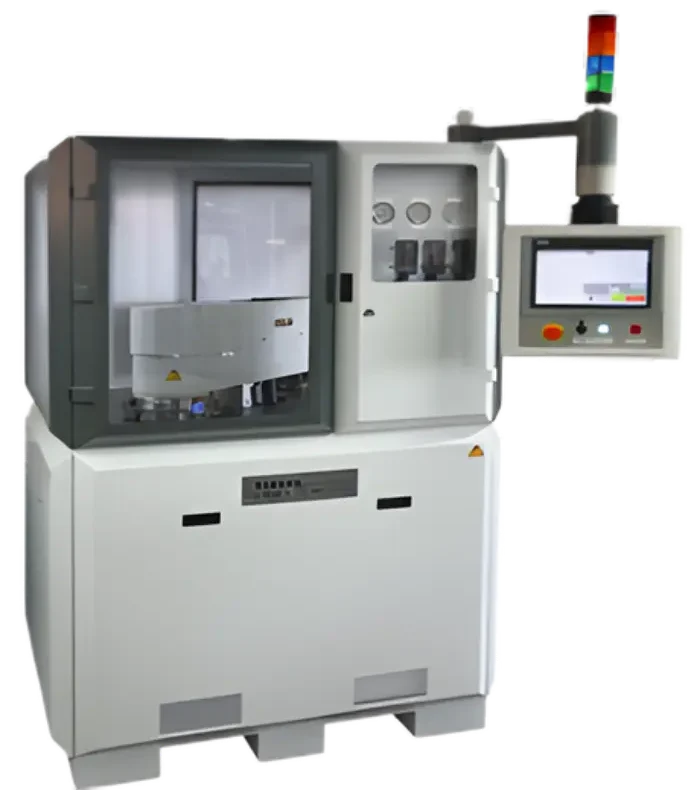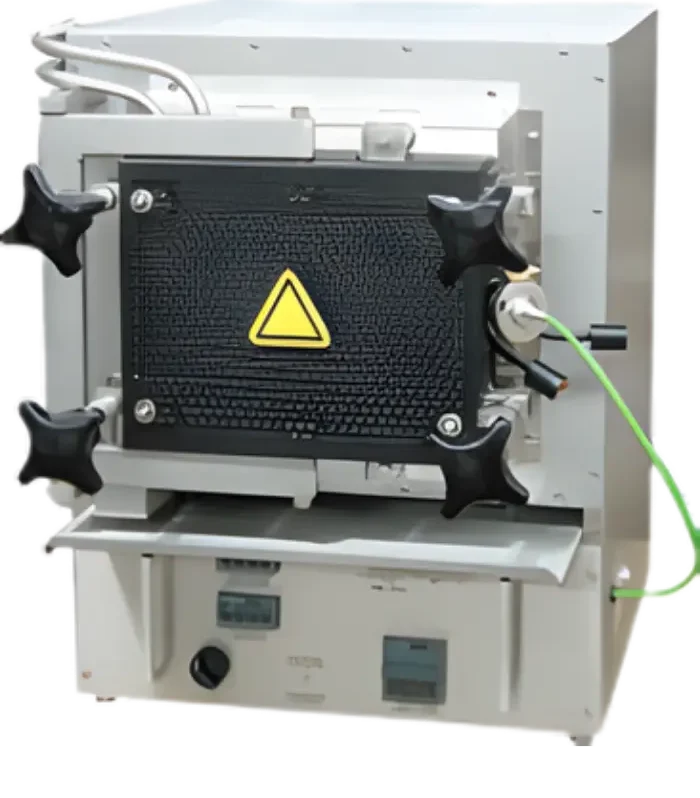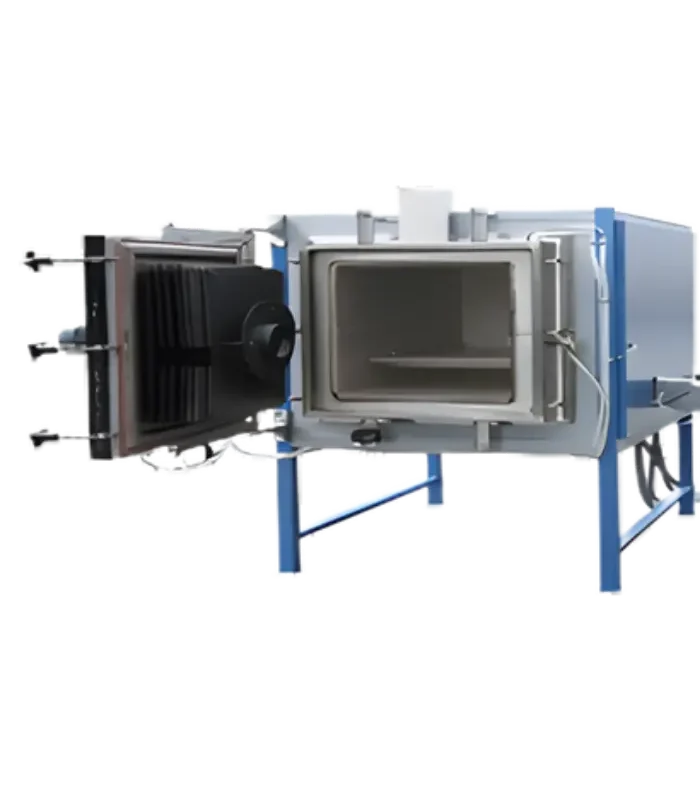
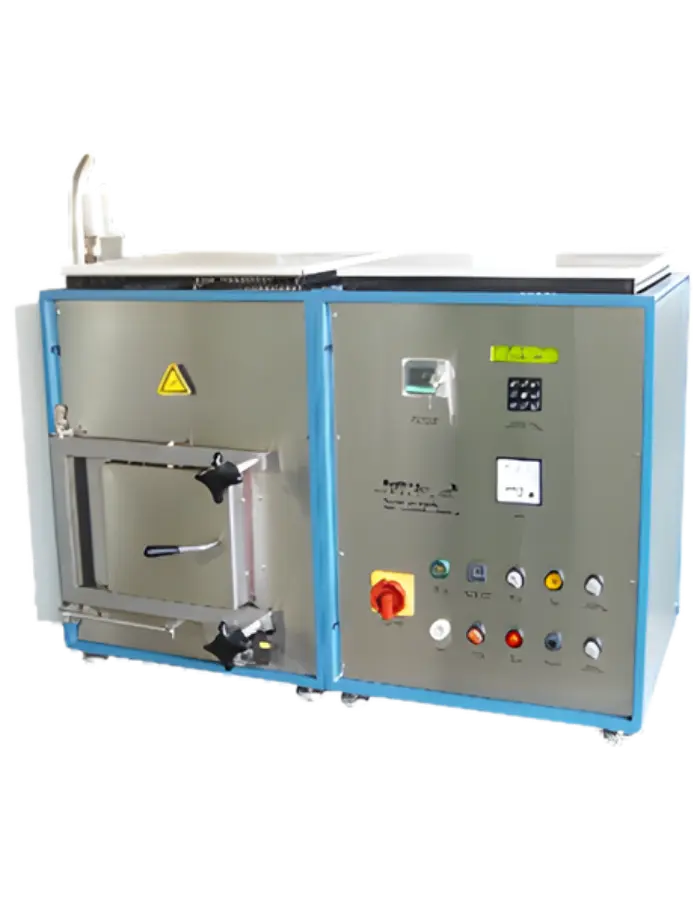
The Linn High Temp – HT Series is a gastight cold-wall modular furnace system designed for use under controlled atmospheres, offering fast thermal cycles and operating at temperatures up to 1820 °C. Available in models rated for 1400 °C, 1600 °C, 1750 °C, and 1820 °C, this high-performance system features ceramic fiber board insulation and a robust double stainless steel housing for corrosion protection and long-term durability.
Heating is achieved through U-shaped MoSi₂ ceramic heaters suspended from the furnace roof, delivering rapid and uniform heating—reaching 1400 °C in under one hour. Temperature monitoring is handled by a Type C (WRe) thermocouple, ensuring precise control even at ultra-high temperatures. With a good space-to-volume ratio and a standard safety controller, the HT Series is ideal for high-temperature applications in research and production environments requiring precision, speed, and reliability.
| Type | Volume (L) | T max °C | Useful chamber mm (w x d x h) | kW |
|---|---|---|---|---|
| HT-1400 | 4 | 1400 | 130 x 190 x 160 | 3,5 |
| HT-1400-M | 12,5 | 1400 | 250 x 200 x 250 | 6 |
| HT-1400-G | 26 | 1400 | 250 x 350 x 300 | 9 |
| HT-1400-GT | 52,5 | 1400 | 250 x 700 x 300 | 16 |
| HT-1600 | 4 | 1600 | 130 x 190 x 160 | 3,5 |
| HT-1600-M | 12,5 | 1600 | 250 x 200 x 250 | 6 |
| HT-1600-G | 26 | 1600 | 250 x 350 x 300 | 9 |
| HT-1600-GT | 52,5 | 1600 | 250 x 700 x 300 | 16 |
| HT-1800 | 4 | 1750 | 130 x 190 x 160 | 3,5 |
| HT-1800-M | 12,5 | 1750 | 250 x 200 x 250 | 6 |
| HT-1800-G | 26 | 1750 | 250 x 350 x 300 | 9 |
| HT-1800-GT | 52,5 | 1750 | 250 x 700 x 300 | 16 |
| HT-1800-Plus | 3 | 1820 | 110 x 170 x 160 | 5 |
| HT-1800-M-Plus | 9,5 | 1820 | 230 x 180 x 230 | 8 |
| HT-1800-G-Plus | 21 | 1820 | 230 x 330 x 280 | 12 |
| HT-1800-GT-Plus | 44 | 1820 | 230 x 680 x 280 | 21 |
| Standard Options | Main Applications |
|---|---|
|
|
STECH is an Engineering company with 20+ years of experience in providing some of the finest environmental testing equipment & system solutions that are used in R&D, Quality Control, Production lines of wide variety of Industries, Testing Laboratories & universities.
STECH sells & supports products from companies such as Thermotron Industries, USA, LiebischGmbh, Poppe+PotthoffGmbh, Infinite Electronics USA (Polyphaser, Transtector), France Etuves, Dynavac USA, DATAQ USA And Georgia Thermal Products USA (GTP), and many specialized product solutions / systems in India and the Middle East.
Engineer – Service position is an individual contributor role. The position is responsible for supporting customers with appropriate technical services & successfully closing all service issues to the satisfaction of the customer. Also independently manage & maintain our test lab as per service business requirement.
STECH is an Engineering company with 20 years of experience in providing some of the finest testing equipment & system solutions that are used in R&D, Quality Control, Production lines of wide variety of Industries, Testing Laboratories & Universities.
The company sells & supports products from companies such as Thermotron Industries, USA, Liebisch Gmbh, Poppe+Potthoff Gmbh, Infinite Electronics USA (Polyphaser, Transtector), France Etuves, Dynavac USA, DATAQ USA And Georgia Thermal Products USA (GTP), and many specialized product solutions / systems in India and the Middle East.
Engineer – Sales position is an individual contributor role. The position is responsible for generating new inquiries, supporting customers with appropriate products, systems, project solutions and successfully closing deals in sales and services rendered by the company.
Market familiarity:
Pharmaceutical, Bio-Tech, Chemical, Life Science industries in Karnataka, Telangana and other South regions.